Conquering Achilles Tendinopathy
Your Guide to a Pain-Free Stride
Here in Perth, our lifestyle is built around being active, whether that means running along the river, playing weekend sports, or simply enjoying a brisk morning walk. However, maintaining that active lifestyle becomes incredibly difficult when every step is accompanied by a sharp, stabbing pain at the back of your heel. The Achilles tendon is the thick cord of tissue that connects your calf muscles to your heel bone. It is the largest and strongest tendon in the human body, designed to transfer force from the calf to the foot so you can walk, run, and jump. When this crucial structure becomes painful, stiff, and thickened, you are likely dealing with Achilles tendinopathy.
At Beechboro Physiotherapy, we frequently treat this condition. The most effective path to recovery is not simply resting and hoping the pain disappears; it requires a structured, evidence-based approach to rebuild the tendon's capacity.
The "Why": Understanding Achilles Tendinopathy
Historically, this condition was called "Achilles tendinitis," which implies that the primary issue is acute inflammation. However, modern clinical evidence shows that chronic Achilles tendon pain is rarely inflammatory. Instead, Achilles tendinopathy is a degenerative condition. This means that the collagen fibers making up the tendon structure break down over time due to repeated overload. We accept that it’s hard to change common phrases and will use Achilles Tendinopathy and Achilles Tendinitis interchangeably.
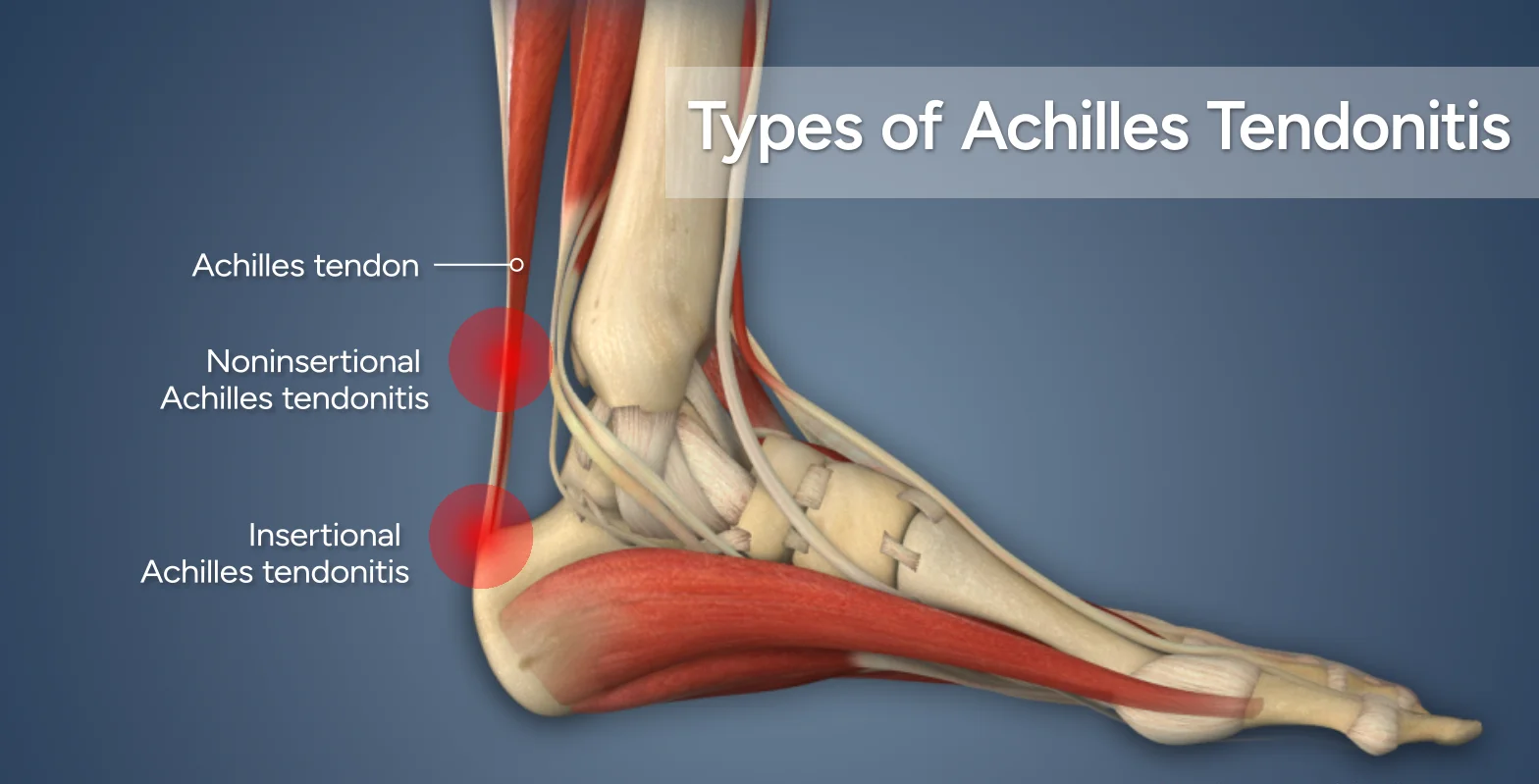
The location of your pain heavily influences your rehabilitation. We classify the condition into two primary categories:
Mid-portion Achilles Tendinopathy: Symptoms are localized to the midportion of the tendon, approximately 2 to 6 cm above the heel bone. This area often feels thickened and is provoked by tendon-loading activities like running or jumping.
Pain or thickening above the heel
Often worse with running, jumping or repeated calf loading
Progressive heel raise loading is usually central
Strength, endurance and plyometric capacity may need rebuilding
Return to running is based on symptom response and strength
Insertional Achilles Tendinopathy: Pain is felt lower down, exactly where the tendon attaches to the heel bone. This presentation is often sensitive to compression, uphill walking, and exercises that force the ankle into a deep stretch (dorsiflexion).
Pain close to the heel bone
Often worse with hills, stairs or stiff shoes rubbing the heel
Early rehab may avoid deep calf stretching
Heel lift or footwear change may reduce compression
Loading usually starts in a more protected ankle position
Key Risk Factors
The risk of developing midportion Achilles tendinopathy is multifactorial and related to an interaction of intrinsic and extrinsic factors that lead to tendon overloading. Common risk factors include:
A sudden change or increase in training intensity, duration, or distance
Decreased calf muscle strength and limited ankle mobility.
Training during cold weather or wearing unsupportive, worn-out footwear.
Recognizing the Symptoms
Achilles tendinopathy is primarily a clinical diagnosis based on your history and a physical assessment. Typical symptoms include:
Stiffness and pain first thing in the morning or after periods of prolonged rest.
Pain localized to the Achilles tendon that is provoked by tendon-loading activities.
A "warm-up phenomenon" where the tendon feels highly painful at the start of a run or walk, but the pain eases after 10 to 15 minutes of movement.
Localized thickening or swelling in the midportion region of the tendon.

The "How": Rehabilitation and Smart Loading
One of the biggest mistakes people make when attempting to treat Achilles tendinopathy is utilizing complete rest. While resting might temporarily ease the pain, it actually causes the tendon to weaken further. The tendon doesn't need rest; it needs the right type of load—progressive, controlled, and consistent. Clinical guidelines advise that complete rest is not indicated for individuals with midportion Achilles tendinopathy.
Another common pitfall is aggressive calf stretching. Stretching an irritated Achilles, particularly with aggressive calf stretches, can actually worsen symptoms by increasing compression on the tendon.
Instead, the cornerstone of Achilles tendinopathy treatment is exercise therapy. Exercise that provides mechanical loading of the Achilles tendon is the treatment with the highest level of evidence. During this rehabilitation, we utilize a pain-monitoring model. It is safe and acceptable to experience mild to moderate pain (up to a 5 out of 10) during exercise, provided the pain and stiffness the following morning do not exceed a 5 out of 10 and do not progressively worsen from week to week.
Top 3 Exercises for Achilles Tendinopathy
A successful rehabilitation program relies on matching the load to the tendon's current capacity. It is critical to start at a level that is right for you and progressively make the exercises more challenging over weeks and months.
1. Isometric Heel Holds
Isometric exercises involve static muscle contractions where the muscle length does not change. These are particularly effective in the early stages of rehabilitation for reducing tendon pain without aggravating the tissue.
How to perform: Stand upright, using a wall or chair for balance. Push up onto your tiptoes on both feet. Transfer your weight onto the injured leg and hold this elevated position.
Duration: Hold for 45 seconds.
Sets: Aim for 4 to 5 sets, resting briefly in between.
2. Heavy Slow Resistance (HSR) Calf Raises
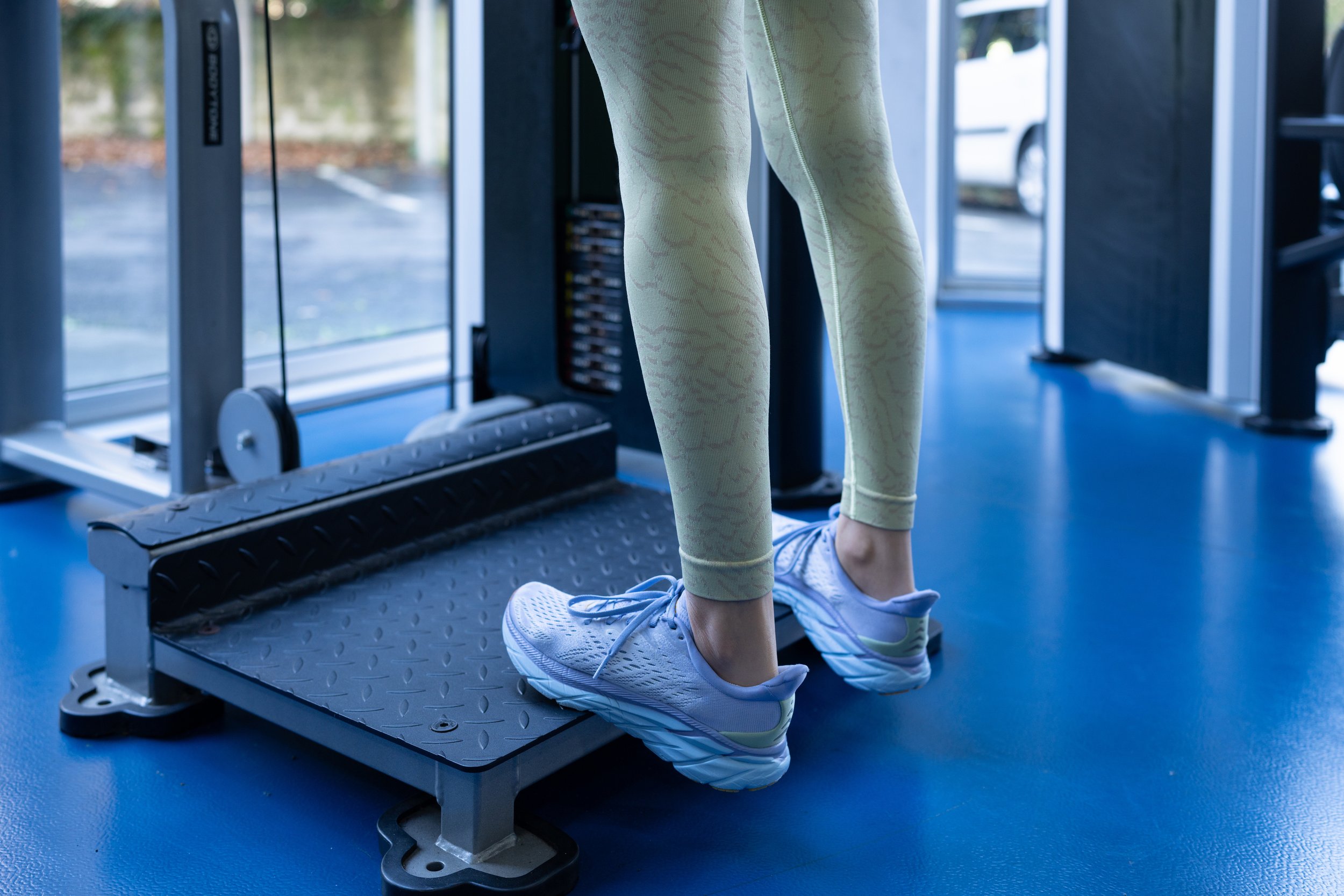
Heavy slow resistance training is a highly effective, progressive loading program that requires access to added weight (like a gym machine, weighted vest, or heavy backpack). Research consistently supports heavy, slow, progressive loading as the most effective way to improve tendon structure and reduce pain.
How to perform: Stand on the edge of a step. Slowly raise yourself up onto your toes, taking 3 seconds to reach the top. Hold for 1 second, then slowly lower your heels back down taking another 3 seconds.
Frequency: This only needs to be done three times weekly to yield significant improvements.
Progression: Start with both legs, progress to a single leg, and systematically add external weight as your capacity increases.
3. Eccentric Heel Drops (Alfredson Protocol)
The Alfredson protocol is a heavy eccentric loading program that has robust clinical evidence for treating midportion Achilles tendinopathy. Eccentric loading specifically targets the lengthening phase of the muscle contraction.
How to perform: Stand on the edge of a step. Use your uninjured leg to push up onto your toes. Shift your weight fully to the injured leg and slowly lower your heel down below the level of the step. Use the good leg to push back up.
Important Note: If you have insertional Achilles tendinopathy (pain at the heel bone), do not drop your heel below the level of the step, as this deep dorsiflexion stretch can increase compression and aggravate symptoms. Perform these from a flat surface instead.
Recovering from Achilles tendinopathy typically takes 8 to 12 weeks to show significant improvement, though chronic cases that have been present for months may take 6 months or more of consistent rehabilitation. Early intervention and consistency with your loading program are the biggest factors in your recovery speed. We are here to accurately diagnose your condition, assess your load tolerance, and guide you through a specialized recovery timeline so you can get back to doing the activities you love.
If you need support, call Beechboro Physiotherapy on 9377 2522 to book an appointment.