Your Guide to a Clear, Pain-Free Head
Whether you are navigating the morning commute or just unwinding by scrolling on your phone, modern life asks a lot of our necks. If you frequently experience a dull, aching pain that starts at the base of your skull and creeps up to the front of your head, you might assume it is just another standard tension headache. However, if this pain is accompanied by a stiff neck, you could be dealing with a specific condition where the true culprit isn't your head at all, but your cervical spine (neck). We call this a cervicogenic headache.
At Beechboro Physiotherapy, we frequently treat cervicogenic headaches. The key to finding long-term relief is recognising that popping painkillers will only mask the symptoms temporarily; to truly conquer the pain, we need a structured, evidence-based approach to address the mechanical issues in the neck itself.
The "Why": Understanding Cervicogenic Headaches
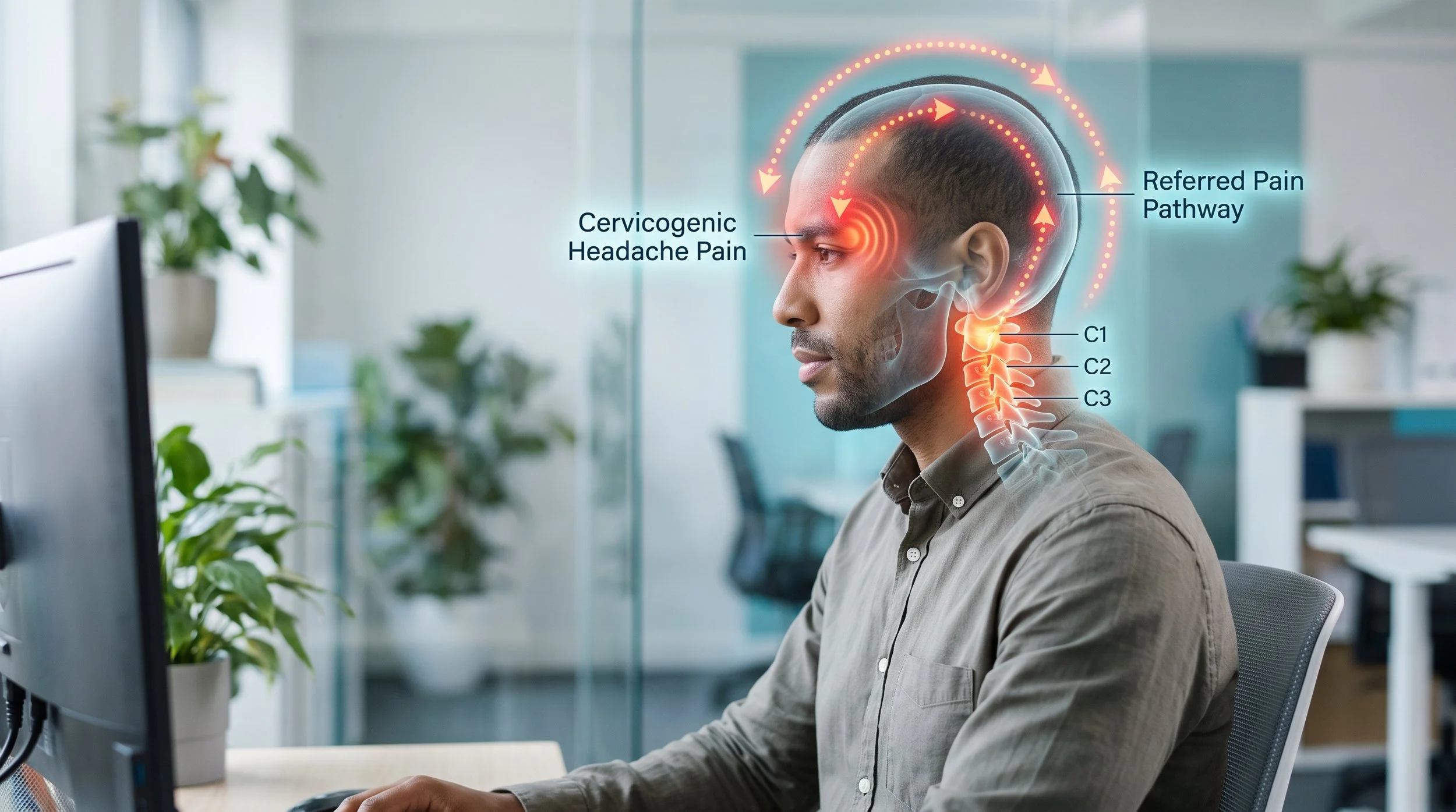
A cervicogenic headache is a type of "referred pain." This means that the pain is perceived in the head, but the actual source of the problem lies in the muscles, joints, or nerves of the upper neck (specifically the C1, C2, and C3 spinal segments).
The upper cervical spine shares nerve pathways with the trigeminal nerve, which supplies sensation to your face and head. When the joints or muscles in your upper neck become stiff, irritated, or inflamed, the brain can misinterpret these signals as pain coming from your head.
We typically classify the mechanical drivers of this condition into two primary categories:
Joint Dysfunction (Facet Joint Stiffness): This occurs when the small joints at the back of the neck become stiff or restricted.
Restricted movement, especially when turning the head to one side.
Made worse by sustained awkward postures (like looking at a screen).
Rehab approaches it by using manual therapy to mobilise the joints and restore normal range of motion.
Requires rebuilding mobility and joint health over time.
Muscular Imbalance and Weakness: This happens when the deep stabilising muscles of the neck (deep neck flexors) become weak, causing the superficial muscles (like the upper trapezius) to overwork and tighten.
Tender, tight bands of muscle at the base of the skull and top of the shoulders.
Made worse by fatigue and prolonged sitting.
Rehab approaches it through targeted soft-tissue release and specific strengthening.
Requires rebuilding the endurance of the deep neck flexors to support the head properly.
Key Risk Factors
Understanding what puts you at risk can help you make vital lifestyle adjustments. Common risk factors include:
Prolonged poor posture (the classic "forward head" or "text neck" posture).
Desk-bound occupations with poor ergonomic setups.
Previous neck trauma, such as whiplash from a car accident or sports injury.
High stress levels leading to unconscious clenching of the jaw and neck muscles.
Recognising the Symptoms
Diagnosis is highly dependent on clinical history and a thorough physical assessment of the neck's movement and strength. Typical symptoms include:
Pain that is strictly on one side of the head or face (unilateral).
Pain that originates at the base of the skull and radiates to the front, often behind one eye.
Headaches that are triggered or worsened by specific neck movements or sustained postures.
Noticeable stiffness or a reduced ability to turn your neck normally.
The "How": Rehabilitation and Smart Loading
The biggest mistake people make when dealing with cervicogenic headaches is relying completely on rest and medication. While resting might temporarily ease a flare-up, it does absolutely nothing to improve the joint stiffness or muscle weakness that caused the headache in the first place. When you return to your normal activities, the headache inevitably returns.
A second common pitfall is aggressive, unguided stretching. Yanking on a sensitive, irritated neck can sometimes cause the muscles to spasm further as a protective mechanism, exacerbating your pain.
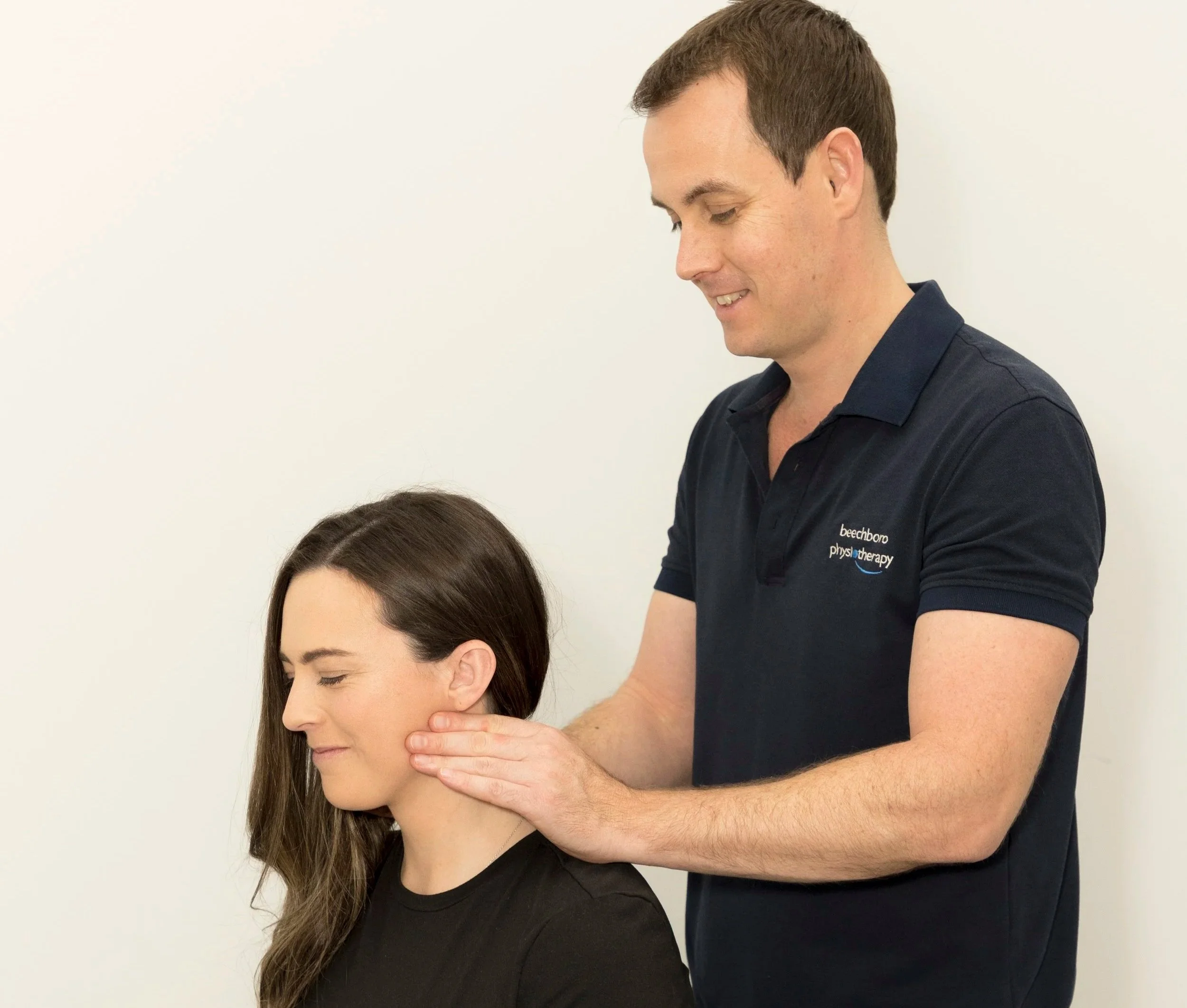
Evidence supports a combined approach: targeted manual therapy to restore joint movement, followed by specific exercises to strengthen the neck. We monitor your progress using a pain-monitoring model, ensuring that the exercises challenge the muscles without severely aggravating your headache symptoms.
Top 3 Exercises for Cervicogenic Headaches
The following exercises are designed to gently restore movement and build endurance in the neck. It is vital to match the load to your current capacity and progress slowly over a matter of weeks.
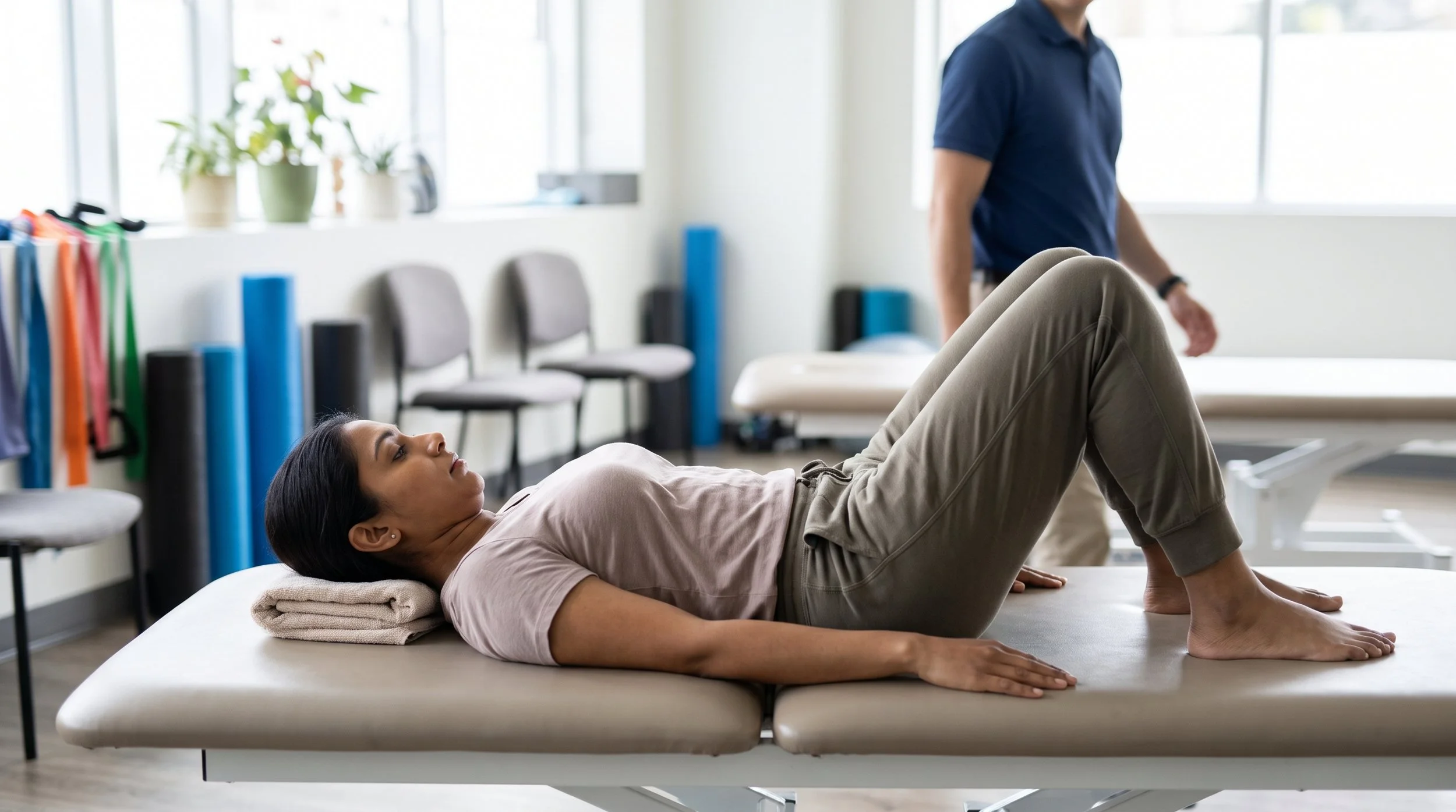
1. Chin Tucks (Deep Neck Flexor Activation)
This exercise targets the deep muscles at the front of your neck, which are often weak in those who suffer from neck-related headaches.
How to perform: Lie on your back with a rolled towel under your neck for support. Gently tuck your chin straight down towards the floor, as if you are making a double chin. The back of your head should stay on the bed. You should feel a gentle stretch at the base of your skull and a slight tightening at the front of your neck.
Duration / Reps: Hold for 3 to 5 seconds. Repeat 10 times.
Sets: 2 sets daily.
2. Thoracic Extension over a Towel
Often, neck stiffness is driven by a stiff upper back (thoracic spine). Improving middle back mobility can take a significant amount of stress off the neck.
How to perform: Roll up a towel and place it horizontally on the floor. Lie on your back so the towel rests across your shoulder blades. Support your head with your hands, keep your knees bent, and gently let your upper back arch over the towel.
Frequency: Perform once daily, especially after long periods of sitting.
Progression: Move the towel slightly up or down your spine to target different stiff areas.
3. Gentle Cervical Rotation (Active Range of Motion)
This helps to lubricate the facet joints in the neck and maintain movement without aggressively pulling on tight muscles.
How to perform: Sit up tall in a chair. Slowly turn your head to look over one shoulder as far as is comfortably possible. Hold for one second, then slowly return to the centre and repeat on the other side. Keep your movements smooth and controlled.
Important Note: Only move within a pain-free range. If turning to one side causes a sharp pain or reproduces your headache, stop before that point. Do not force the movement.
Recovery from cervicogenic headaches depends on how long you have had the symptoms, but early intervention and consistency with your exercises are key to a faster recovery. At Beechboro Physiotherapy, we will properly diagnose the source of your headaches, assess your neck mechanics, and guide you through a tailored plan so you can get back to living a clear-headed, active life.
If you need support, call Beechboro Physiotherapy on 9377 2522 to book an appointment.