Understanding Load vs. Capacity in relation to low back pain
It was only a small box, why does my back hurt?
A common injury we encounter in physiotherapy is someone hurting their lower back while performing a routine activity—something they've done countless times before, like lifting a small box or picking up a child from the floor. This can be confusing and disheartening, leading many to question their physical resilience or worry that they're “getting old.”
This leads us to a key concept we often discuss with patients: Load vs. Capacity. This will be discussed in the context of lower back pain but can be applied across all injuries.
What is Load?
Load refers to any form of physical stimulus or demand placed on our body over a given period of time.
Sometimes this load may change – like starting a new heavy lifting job, beginning a sports season, or spending four hours in the garden on a Sunday because you’ve ignored it for the last three months.
Sometimes the load may stay consistent – like completing your daily routine of regular activities, such as picking up your kids, or hanging up your washing, or running up the stairs because you slept in again and your boss is on the phone wondering where you are.
People are often surprised that a seemingly simple or consistent task could lead to injury. That’s where the concept of capacity becomes relevant.

Capacity
Capacity is the ability of our tissues to tolerate the load placed on them. It’s influenced by a range of internal factors, including but not limited to:
Sleep: if you’re waking up grumpy from a poor sleep, so is your body. Our bodies require sleep to recover from the day-to-day activities we partake in.
Stress and Anxiety: Periods of high stress can affect the body’s natural healing processes and thus drive down our capacity.
Age: As we age, the ability of our tissues to recover from load tends to decrease.
Diet: Poor diet slows recovery by limiting the nutrients your body needs to heal and adapt.
Fitness: Trained individuals are more likely able to tolerate an increased load placed on their system.
These factors are often overlooked but can significantly impact how resilient our body is to everyday physical stress. When capacity is reduced—without us realizing it—even small loads can push our body beyond its limit.
Injury: When Load Exceeds Capacity
An injury typically occurs when the load placed on the body exceeds its capacity to tolerate it.
If we gradually and steadily increase our load over time, the body adapts. Our capacity improves, and we become more resilient.
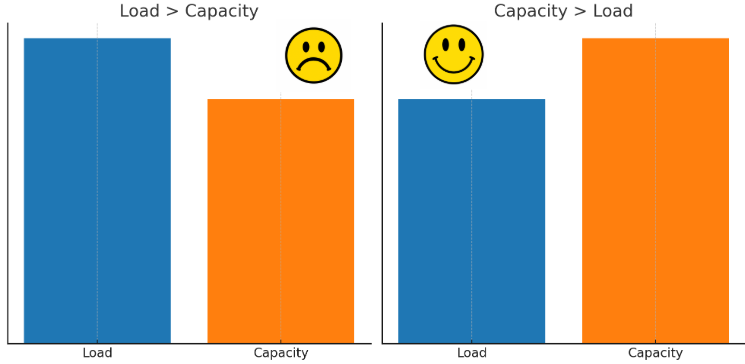
BUT if the load increases too rapidly—or if our capacity is already compromised due to things like poor sleep, high stress, or fatigue—our ability to recover is reduced. This imbalance increases the risk of injury.
A Common Example
Let’s talk about a simple act of picking something up from the floor. If you're a parent, picking up your child is something you do daily. The load of lifting your child might not have changed at all. But if your capacity has been reduced by poor sleep, work stress, or missed meals, your usual activities may suddenly exceed what your body can tolerate—then bam, your back’s killing and you’re on the phone to your local physiotherapist.

The Takeaway
Injuries aren’t always about doing too much—sometimes, it’s about doing your usual routine with less capacity than usual.
Understanding the balance between load and capacity helps us make sense of general aches and injuries—and it’s a framework we can use to not only recover but reduce the risk of injuries in the future.
If you would like to understand this concept further and have any questions, you can book in with our physiotherapists to discuss this principle and how you can apply it to your daily routine.