Do you have longstanding back pain?
GLA:D Back is a treatment option for patients with long-term or recurrent low back pain that affects everyday life. The program combines both education and exercise to improve self-management skills in patients with back pain.
Originally developed in Denmark (GLA:D Good Life with osteoarthritis in Denmark), GLA:D Back was developed to provide evidence-based self-management programs for people with persistent or recurrent low back pain. The program's purpose is to provide patients with the knowledge and tools to help them reduce their back pain and to better manage the pain that is present.
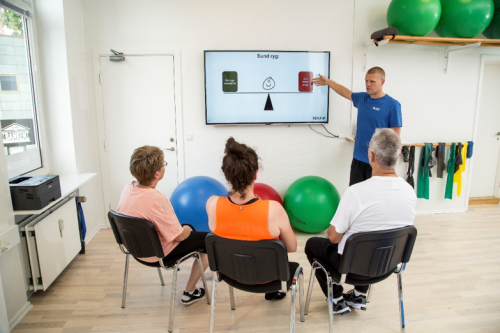
GLA:D Back can help chronic back pain.
GLA:D Back is an evidence-based program for persistent back pain that restores control, reduces flare-ups and improves daily function. Run by trained physiotherapists, it combines pain education and self-management with tailored exercises for strength, movement control and function. You’ll learn to safely increase activity, manage flare-ups and gain confidence for work and daily life.
Benefits:
Less pain and disability
Improved movement, strength and endurance
Practical flare-up management and prevention
Structured, measurable progress
GLA:D supports long-term health
GLA:D program is built on the idea that education and guided movement can significantly improve function. Delivered by physiotherapists trained in the GLA:D methodology, this program helps you feel more in control of your back pain. Research suggests that participants may experience:
Reduced back pain and stiffness
Improved ability to move and stay active
Less reliance on pain medication
Increased confidence in managing daily activities
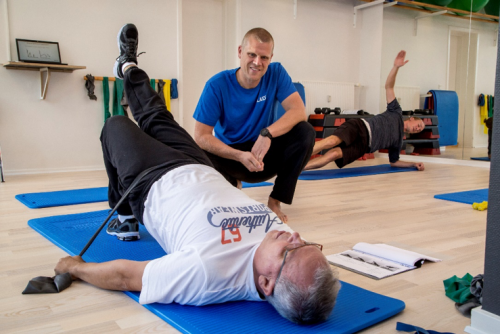
Supervision and Guidance
Your GLA:D Physio will be there to support you through the GLA:D Program with advice on exercise technique and progression through the program.
Program Strucure
Initial testing, setting goals and recording baseline questionnaires
During this consultation, patients determine their starting point for training and their goals for the course.
Two patient education sessions
These sessions are taken in groups, where participants learn about the back, why back pain occurs and what can be done to improve their back to better meet the demands of everyday.
Sixteen exercise classes over eight weeks
Exercise training classes take place twice a a week for eight weeks, with the opportunity to customise it to the patient’s needs. The exercises can be performed with varying degrees of difficulty and adapted to the individual participant. The purpose of the exercises is to achieve greater strength, suppleness, balance and variation in the movements of the spine, so that patients can use the spine more easily and have more confidence to move naturally and freely.
Final testing, goals and follow-up questionnaire
At the conclusion of the program the clinician will perform an evaluation of the patient’s outcomes, both with physical tests and assessment of goals.
How long is the GLA:D Back program?
The program typically runs over eight weeks. It includes two education sessions with your physiotherapist, followed by twice-weekly exercise sessions designed to support mobility and joint care.
Is a GP referral required for a GLA:D program?
No referral is required to start the program. However, if you have a Medicare Team Care Arrangement (Chronic Disease Management Plan - Care Plan), you are welcome to bring this to your initial assessment. Funding for the program may also be available if you have a Supprt at Home Package.
Can I claim GLA:D on private health insurance?
Coverage for the GLA:D program depends on your private health insurance provider and level of cover. We recommend checking with your insurer for specific details.